
Margam
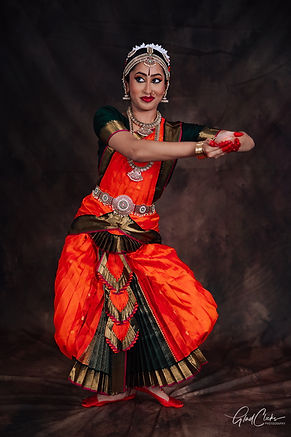
Pushpanjali - Mahadeva Sutam
Ragam - Arabi
Talam - Adi
Composer - Padma Vibhushan Dr. Mangalampalli Balamuralikrishna
A Pushpanjali is a traditional invocatory piece in Bharatanatyam, where the dancer offers flowers as a gesture of respect and devotion to the divine, the guru, the musicians, and the audience.
This Pushpanjali is a tribute to Lord Ganesha, the son of Lord Shiva. The dancer invokes Ganesha, the remover of obstacles, offering devotion and seeking his blessings to commence the Arangetram.

Alarippu
Talam - Misra Chappu
Composer -
Alarippu is traditionally one of the first pieces a dancer learns, and is a pure nritta piece, meaning it is based only on rhythm. Alarippu means “budding flower” in Tamil, so as the dance progresses so does the speed and intensity of it.

Keerthanam - Saraswati Namastubyam
Ragamallika
Talam - Adi
Composer -
A Keerthanam is a lyrical and expressive composition that highlights the dancer’s devotion, blending melody and movement to honor the divine.
This Keerthanam is particularly unique, as it is composed entirely of three well-known Sanskrit shlokams on Goddess Saraswati. Through graceful movements and heartfelt expressions, the dancer seeks her blessings in the pursuit of knowledge and the arts.

.jpg)

Anjaneya Varnam
Ragam - Keervani
Talam - Adi
Composer - Kalaimamani Shri Madhurai R Muralidharan
A Varnam is the central, most elaborate, and challenging piece of a Bharatanatyam Margam, allowing the dancer to showcase Bhava (emotion), Raga (melody), Tala (rhythm), Nritta (pure dance, and Nritya (expression). This Varnam is dedicated to Lord Anjaneya (Hanuman), the embodiment of strength, devotion, and humility.
The piece begins with Hanuman’s birth. Anjani, a devout woman, was known for her unwavering dedication to prayer and longing for a child. One day, while in the forest, she encountered a powerful windstorm created by Lord Vayu. Through his divine blessing, Anjani was granted a son (Lord Hanuman) destined to become one of the greatest devotees of Lord Rama.
As a playful young child, Hanuman mistakes the sun for a giant mango and attempts to eat it. With his father Vayu’s blessings, he soars towards the sun. Alarmed, Lord Surya seeks help from Lord Indra, who strikes Hanuman down. In anger, Vayu withdraws all the air, prompting Lord Shiva to intervene. Shiva revives Hanuman and restores balance to the world, blessing him with immense strength.
The Varnam also highlights Hanuman’s unwavering devotion to Lord Rama. When Sita is abducted by Ravana, Hanuman pledges to help Lord Rama. He enters Lanka, boldly warns Ravana of Rama’s power, and later finds Sita, offering her Rama’s ring as a sign of hope and his devotion to Rama.
With his strength and loyalty, Hanuman helps Lord Rama build the bridge to Lanka, defeats Ravana, and rescues Sita. Through expressive abhinaya and dynamic footwork, the dancer brings these episodes to life, paying tribute to Hanuman’s courage, devotion, and enduring spirit.

Shiva Stuthi
Ragamallika
Talam - Adi
Composer -
Lord Nataraja, an incarnation of Lord Shiva, is revered as the cosmic dancer who embodies the rhythm and energy of the universe. In his dance, each of his four hands holds profound symbolism: the upper right hand carries the damaru, representing the rhythm of creation; the upper left hand holds agni, symbolizing destruction; while his other gestures guide devotees through illusion and toward salvation.
In this Stuthi, the dancer celebrates the divine joy that Lord Nataraja experiences as he dances, illustrating the harmony of creation, preservation, destruction, illusion, and liberation.

Javalli - Indendu Vachitivira
Ragam - Surati
Talam - Misra Chappu
Composer - Kshetrajna
A Javalli is a short, light classical composition often centered around themes of love, longing, and playful emotion. It allows for expressive storytelling through abhinaya (facial expressions and gestures).
This Javalli expresses the playful frustration of a nayika (heroine) questioning her beloved’s (Krishna) indifference. She asks, “Why have you come now, after neglecting me?” Her words showing equal parts of sarcasm and longing. With subtle, intricate abhinaya, the dancer brings out the emotional tension between pride and vulnerability.
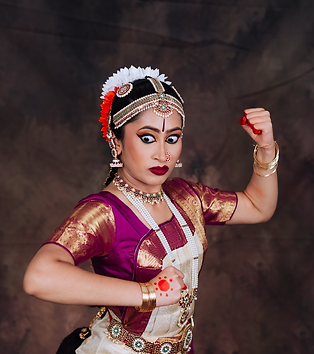
Thillana
Ragam - Vallachi
Talam - Adi
Composer -
A Thillana is a rhythmic finale in a Bharatanatyam performance. It showcases the dancer’s command over rhythm (nritta) while often weaving in a short expressive segment (abhinaya) toward the end.
This Thillana pays homage to Kali, a fierce form of Goddess Shakti. Through bold movements and intense expression, the dancer embodies Kali’s unstoppable energy as she defeats the demon Mahishasura, symbolizing the ultimate triumph of good over evil.

Mangalam - Achutam Keshavam
Ragam - Yaman Kalyan
Talam - Adi
Composer - Ganapati Saccidananda
The dancer ends the Arangetram with Mangalam, meaning an auspicious ending. A non-traditional mangalam, this piece is a popular bhajan on Krishna. Here she does Namaskaram to god, orchestra, guru, and the audience to conclude the Arangetram.